

Cinema owners see a new hurdle to recovery: the Warner deal

Cinema owners fear that Netflix or Paramount acquiring Warner could reduce the number of theatrical releases or speed the time to streaming platforms.


PORT CHESTER, N.Y.—“Avatar: Fire and Ash," a visual spectacle and the third installment in this blockbuster franchise, is the sort of movie made for the big screen. Its holiday arrival was eagerly anticipated by cinema owners still working to lure people back after the pandemic.
Yet opening night last week in this New York City suburb was hardly encouraging. The IMAX 3-D screening of Avatar at the 14-screen AMC movie theater was only about half full.
And now, theater owners are contending with another concern on the horizon: a potential deal for Warner Bros. Discovery.
Netflix agreed this month to acquire Hollywood studio Warner Bros. for $72 billion, while Paramount is still competing for Warner with a hostile bid.
Either deal would result in fewer theater releases, analysts and theater owners say. And if Netflix prevails, it could mean shorter periods of exclusivity before movies are sent to streaming platforms, though both Paramount and Netflix have said they wouldn’t take this approach.
“When legacy studios are absorbed there’s a significant decline in production," said Michael O’Leary, chief executive of the theatrical exhibition trade group Cinema United.
Movie attendance has already plummeted in recent years under competition from streaming platforms and a slowing pipeline of blockbusters. Many theaters closed for good during the pandemic.
Those that survived often had to pump millions of dollars into upgrading their facilities. Movie theaters’ real-estate expenses as a percentage of sales, including rent, taxes, insurance and maintenance, are up by more than a third since 2019, according to Datex Property Solutions.
The business appeared to be stabilizing this year as the pace of theater closures slowed. Domestic box-office sales are expected to total about $8.8 billion this year. That is a 3% increase from 2024, largely due to rising ticket prices, according to Nash Information Services, which tracks box-office data.
But it is still far below peak sales of more than $11 billion in annual sales for the five years before the pandemic. Investors generally believe that the industry needs to reach $10 billion for theater owners to be as profitable as they were before the pandemic, said Eric Wold, an analyst with Texas Capital Securities.
To get there, theater owners need more movies like this year’s “A Minecraft Movie" that draw big crowds to the big screen. Avatar ended up grossing an estimated $88 million in the U.S. and Canada over opening weekend, a solid but not spectacular showing, according to Disney.
“When the movies are there, people want to go," said Greg Marcus, CEO of the theater chain Marcus Corp.
But the pipeline of movie releases has slowed significantly over the past five years because of film-production disruptions caused by the pandemic and then labor strikes in Hollywood.
Unable to control the flow of movie production, theater owners have turned to upgrading their properties to attract customers. Marcus Corp. has spent $390 million over the past decade installing plush lounge seating, massive screens and new sound systems, and adding handcrafted cocktails and thin-crust pizza.
Other theater owners are adding playgrounds, bowling alleys and stand-alone bars to their cinemas. Flix Brewhouse, a dine-in chain that opened its first location in Texas in 2011, is profitable thanks to its food-and-beverage offerings such as the in-house brewed Nebulas Hazy IPA and Bacon Brewhouse Burger.
The chain now has 11 theaters and is looking to open more, said Chief Revenue Officer Chris Randleman. But he added that a steady flow of movies and long exclusivity periods are critical to Flix’s success.
“We need to have a healthy window so people aren’t just like, ‘Oh, I’ll just wait for streaming,’" Randleman said.
Angelica Cilio, 20 years old, said she often went to the movies with friends when she was younger but fell out of the habit during the pandemic. Now, she mostly watches via streaming services, making an exception to take her little sister to “Five Nights at Freddy’s 2" last week.
“I would say going to the movies is just a fun, once-in-a-while thing," Cilio said.
Netflix, as the godfather of movie streaming, has historically bypassed theatrical runs and sent only some of its original films to theaters for brief periods.
The company sent at least two-dozen films to theaters this year, and the co-CEOs have said they would continue to release Warner films in theaters with traditional exclusivity windows.
There are other hopeful signs for cinemas. Films aimed at younger audiences have performed the best in recent years, and a robust slate of movies is scheduled for the next few years including long-awaited sequels in the popular Star Wars and Toy Story franchises.
Gen Z is also going to the movies more often. People between the ages of 20 and 24 grew as a percentage of the moviegoing population in the second and third quarters of this year compared with the same period last year, according to the firm Kalibrate, which analyzed cellphone data for moviegoers to national chains.
“Yes, it might be a little bit more costly than what you spend at home," said Emanuel Lopez, 21, who attended the Avatar premier in Port Chester and shelled out $30 for his ticket and a soda. “But when you come to the movie theaters you get to experience a whole new dimension."
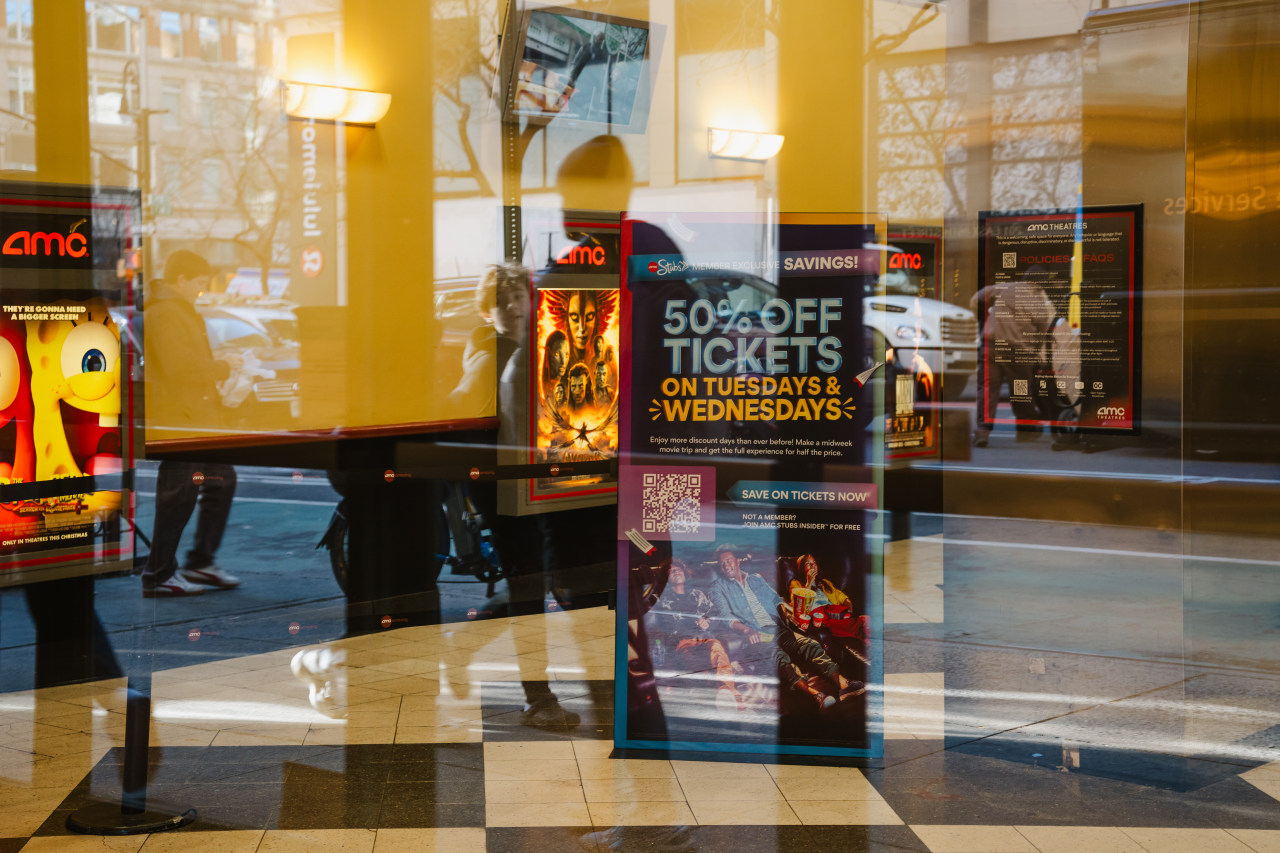
Loyalty programs such as AMC Stubs A-List program, which allows its nearly one million members to see up to four movies weekly for a monthly fee, are also drawing people back to theaters.
A-list member Ed Restrepo, 41, said he goes four to five times a month if there are enough movies playing. But he’s finding fewer people packing the cinema.
“It’s not common to have theaters really sell out like that anymore, unfortunately," he said.
Write to Kate King at kate.king@wsj.com
topics


